Environment · 9 minute read
Stone for outdoor use.
Patios, outdoor kitchens, fireplaces, pool surrounds. Outdoor stone faces freeze-thaw cycles, UV bleaching, salt, and rain in volumes interior stone never sees. The right choice depends on climate first, aesthetic second.
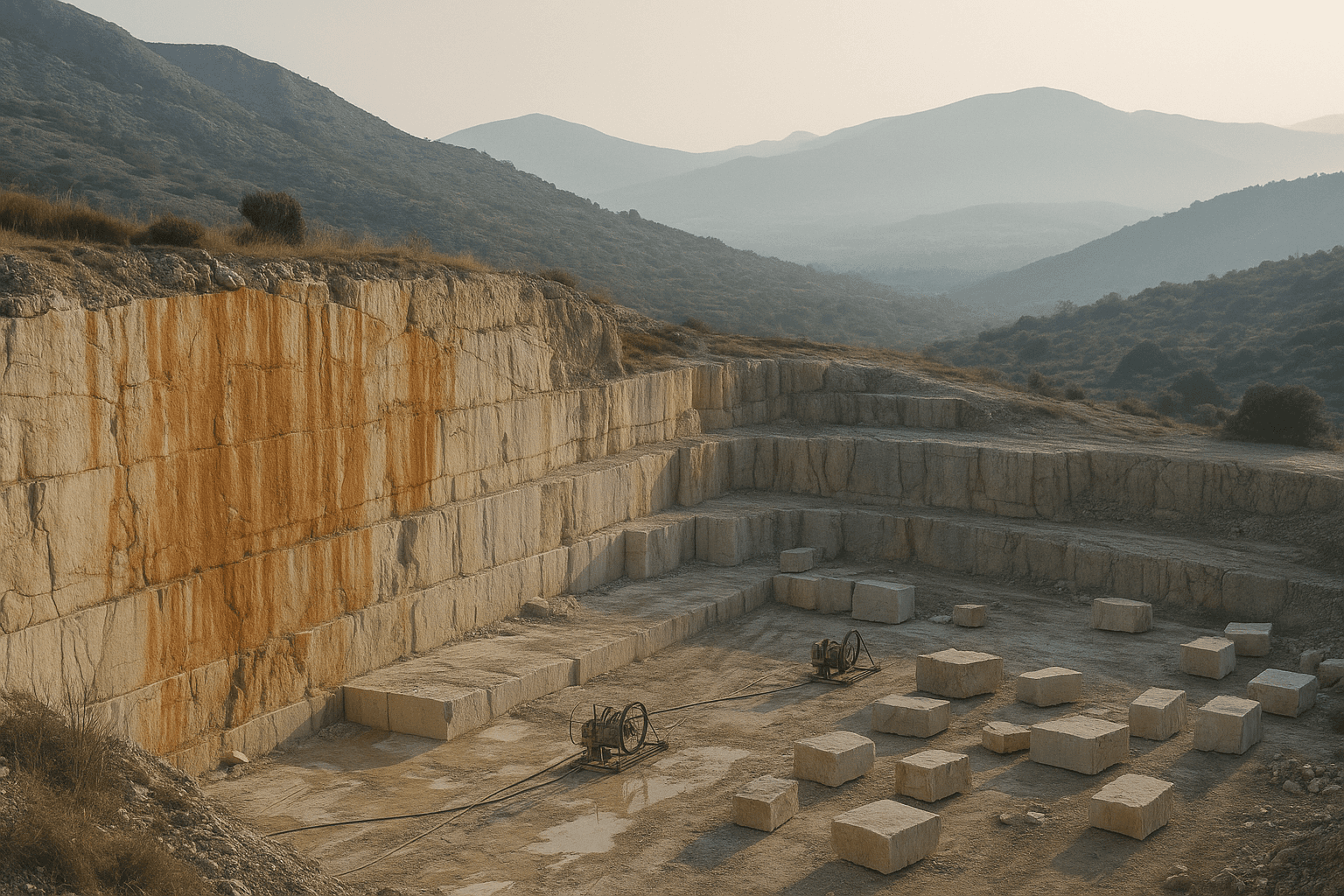
Indoor stone has predictable conditions: 70°F, 40% humidity, no UV, no salt. Outdoor stone faces -20°F to 110°F, drought to driving rain, full sun, road salt or pool chemistry. Some stones thrive in this; some fall apart in three winters. Climate is the first specification, not aesthetic.
- Minimum hardness for outdoor
- Mohs 6+
- Maximum water absorption
- <0.5%
- Pigment requirement
- UV-stable
Soft stones (marble, soapstone) can lose detail to weather and freeze-thaw within a decade.
ASTM C97 standard. Stones above this absorb water that freezes, expands, and cracks the matrix.
Some iron-rich granites bleach under sun. Test the lot in direct UV before committing to a large outdoor install.
[imagery brief: stone patio outdoor]
What survives outside.
Granite, quartzite, and limestone (specifically dense varieties like Indiana limestone) are the workhorses. All three are dense, low-porosity, and survive freeze-thaw cycles well.
The avoid list: marble (too soft, etches with rainwater carrying acid), soapstone (chips with frost), travertine (porous, fills with debris), most onyx (unstable color in UV).
“Outside, the weather is the customer.”
— Marina K.
The pool surround question.
Pools introduce two problems beyond normal outdoor exposure: chlorine (or salt) chemistry, and constant water film. Granite and quartzite both handle this; limestone less so. Travertine pool decking is popular but requires more sealing and weathers faster.
Slip resistance also matters around pools — go honed or even brushed/leathered finish. Polished stone in wet shoes is dangerous.
[imagery brief: outdoor kitchen with stone counter]
Outdoor-rated stones.
Granite
Best all-around outdoor
- Freeze-thaw
- Excellent
- UV
- Stable
- Salt
- Resists
- Cost / sqft installed
- $80–$160
- Best for
- Patios, outdoor kitchens, pool surrounds
Quartzite
Premium outdoor
- Freeze-thaw
- Excellent
- UV
- Stable
- Salt
- Resists
- Cost / sqft installed
- $130–$240
- Best for
- Premium outdoor kitchens, fireplaces, design-forward installs
How to spec for outdoor.
01
Lead with climate
Cold zones (USDA 1-5): only granite, quartzite, or dense limestone survive freeze-thaw cycles. Warm zones (USDA 9-11): more options open up.
02
Test water absorption
ASTM C97 below 0.5% means it can survive winter. Above 1% means freeze-thaw cracking is likely within 5 years.
03
Choose textured finish
Honed, brushed, leathered, or flamed. Polished outdoor surfaces are slippery and reflect harshly in sun.
04
Plan the seal cycle
Outdoor stone needs sealing 2x/year minimum. Sealer choice matters — penetrating sealers outperform topical for outdoor environments.
A note on this
On marble fireplaces ‘outdoor’.
Marble surrounds on outdoor fireplaces or pizza ovens look beautiful for one season. By spring of year two, freeze-thaw cracking is visible at every edge. The honest answer: marble is for indoor fireplaces. Granite or quartzite outdoors. The aesthetic is similar; the durability is decades better.
“The stone outside has to work harder than the stone inside. Spec accordingly.”
— Lou D.
Lineage
A short history.
Antiquity
Granite paving and limestone steps in Roman public spaces. Selected for durability against weather over centuries — and many of those installations still serve.
1900s
American suburban patios standardize on slate and bluestone — locally available, weather-rated, affordable.
1990s
Brazilian granite enters outdoor residential at scale. Outdoor kitchens become a category.
2010s
Quartzite arrives at outdoor residential price points. Premium outdoor projects shift toward it.
2026
Honed Earth lists every supplier with explicit indoor/outdoor rating + ASTM data.
Common questions
Can I use the same slab indoors and outdoors?
Sometimes — if the stone is rated for both. Granite and quartzite work in both contexts. The transition between indoor and outdoor needs a thermal break (the stone shouldn't span both, because thermal expansion will crack the join).
What about flagstone?
Flagstone (typically slate, sandstone, or quartzite) is purpose-cut for outdoor use. Different format — irregular shapes laid in mortar bed. Excellent for patios; not what HE primarily lists, but the underlying stones are.
Does outdoor stone need different sealing?
Yes — penetrating sealers (siloxane-based) outperform topical sealers outdoors. Plan for 2x/year application; the fabricator will note the recommended product on the install paperwork.
What's the warranty story for outdoor installs?
Suppliers warranty natural stone for material defects. They don't warranty against weather. The fabricator typically warranties install workmanship for 1–2 years. Outdoor stone failures from freeze-thaw or UV are typically not covered.
Browse outdoor-rated stone.
Every Honed Earth listing carries indoor/outdoor rating, ASTM water-absorption data, and freeze-thaw certification.