Durability · 8 minute read
Quartzite for high-traffic kitchens.
The kitchens that actually get used — by families, by cooks, by people who keep dogs and live in houses — earn their stone the hard way. Quartzite is the stone that earns its keep back.
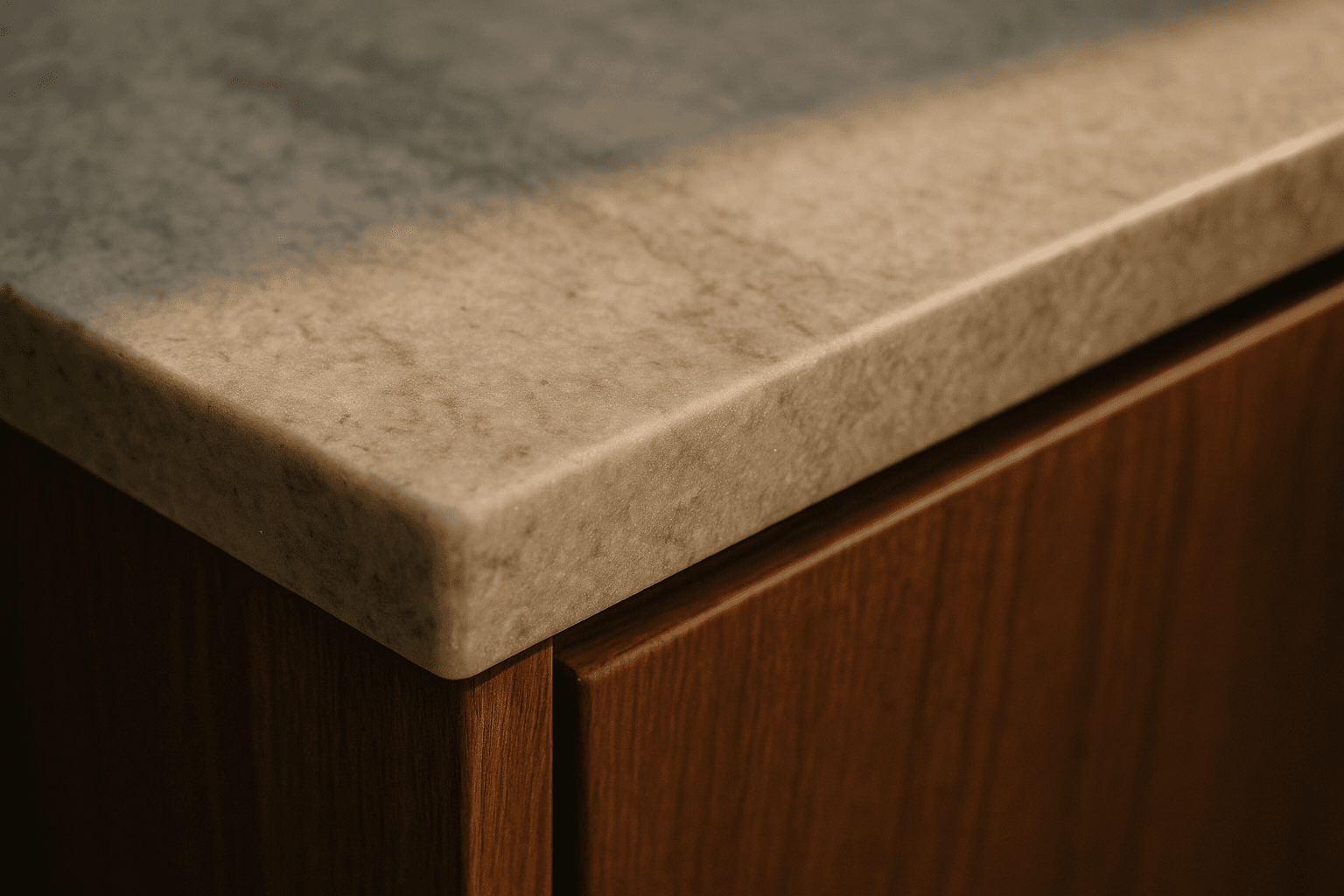
High-traffic isn’t a euphemism for “family.” It’s a real specification: how many meals get cooked, how many people use the kitchen at once, how often hot pans land on the counter, how many decades the kitchen has to survive. Quartzite is the natural-stone answer for kitchens that actually get used.
- Hardness
- Mohs 7
- Etching from kitchen acids
- 0
- Median surface life
- 20–30 yr
Harder than glass, harder than steel knives. Practically scratch-proof in domestic use.
Citrus, vinegar, tomato, red wine — none of them affect quartzite.
A properly-sealed quartzite counter looks identical at year 20 and year 1.
[imagery brief: busy family kitchen with quartzite]
Why quartzite holds up.
Metamorphosed sandstone. Silica dioxide — the same material as glass — fused under heat and pressure into a single dense crystalline matrix. The mineral structure is essentially uniform, which is why nothing common in a kitchen affects the surface.
Hot pan straight off the burner: fine. Knife dropped on the edge: dent the knife, not the stone. Citrus juice spilled overnight: wipe and forget. The stone itself is bored by your kitchen.
“Quartzite is what you choose when the kitchen is for cooking.”
— Marina K.
The only thing you have to do.
Annual sealing. Fifteen minutes. About $40 in materials. The fabricator will leave you with the brand and grade of sealer they applied; restocking is straightforward.
That’s it. There is no other recurring maintenance. You wipe the counter daily, you seal it once a year, and the stone outlasts the kitchen.
[imagery brief: quartzite seal application]
Quartzite vs. its alternatives in high-traffic kitchens.
Quartzite
Hard silicate
- Etches
- No
- Heat
- Up to 1000°F
- Sealing
- Annual
- Patina
- None — looks new for decades
- Cost / sqft installed
- $110–$220
- Best for
- Daily-use kitchens, families, cooks, pets
Honed marble
Soft carbonate
- Etches
- Yes — citrus, vinegar
- Heat
- Tolerates hot pans
- Sealing
- Quarterly
- Patina
- Develops in months
- Cost / sqft installed
- $80–$160
- Best for
- Bakers, low-traffic kitchens, patina lovers
How to spec quartzite for a busy kitchen.
01
Confirm it's actual quartzite
Some sellers misrepresent dolomitic marble as quartzite. The honest test: a steel knife should NOT scratch real quartzite. Honed Earth listings include mineral identification.
02
Pull lot continuity for multi-slab installs
Different lots will not match, even from the same quarry. Insist on lot-continuous slabs for islands plus perimeter.
03
Choose finish honestly
Honed for daily-use counters; polished for showcase walls or vanities. Polished quartzite in a busy kitchen still works — it just shows water spots.
04
Schedule the seal
First year: install + initial seal (factory). Year 1.0: re-seal. Repeat annually. The sealer adds 15 minutes to your year.
A note on this
On the ‘is it really quartzite’ question.
The quartzite category is occasionally muddied by sellers who describe softer dolomitic marble as quartzite. The Mohs-7 hardness test is the cheapest verification — a steel knife cannot scratch real quartzite. Honed Earth supplier listings include mineralogy verification. If your fabricator can't tell you the lot's mineralogy, the slab isn't quartzite-grade until they can.
“The stone is patient. The kitchen is not. Choose accordingly.”
— Lou D.
Lineage
A short history.
Antiquity
Quartzite was the toolstone of choice — knives, scrapers, axe heads. Hard, hard to work with, harder than anything else around.
1990s
Diamond saw blades become affordable. Quartzite enters US residential at scale for the first time.
2010s
Designers discover quartzite's durability story. Marketing collapses it into ‘the new marble’ — which is misleading. It's its own category.
2026
Honed Earth lists every active quartzite supplier with lot-level photos and mineral verification.
Common questions
Is quartzite the same as quartz?
No. Quartz is engineered (silica chips bound in resin). Quartzite is natural metamorphic rock. Both have similar hardness; everything else is different.
Does quartzite scratch?
Practically no. Steel knives won't scratch it. Diamond rings might leave a hairline mark on the most polished varieties; in normal kitchen use this isn't relevant.
What about heat tolerance?
Excellent. Hot pans straight from the burner are fine. Sustained heat above 1000°F can cause crazing on some lots; almost no domestic kitchen reaches that temperature.
Why is quartzite more expensive than granite?
Smaller list of source quarries (mostly Brazil, Norway, India), denser stone means more diamond tooling cost, and slower fabrication. The premium is real.
Browse verified quartzite from active suppliers.
Every quartzite listing on Honed Earth includes mineralogy verification, lot, finish, and dimensions.