Finish comparison · 8 minute read
Honed vs. polished — what actually changes.
The same slab. Two surface treatments. They look almost identical when wet. Bone dry under a kitchen window, they read like different stones.

Stone is named twice. Once for the material — Carrara, granite, soapstone, quartzite — and once for the finish. The finish is what your hand actually touches and what catches the kitchen light. Most stone in the wild is sold polished, almost as a default, but the choice between honed and polished changes maintenance, glare, and the way the room feels by an order of magnitude. The slab is the same. The room is not.
- Reflectance · polished marble
- 85%
- Reflectance · honed marble
- 20%
- Difference in durability
- 0
Mirror-grade. Catches every overhead light. Makes a kitchen feel formal and bright.
Diffuse. Reads soft. Hides etching well. Reads more matte-modern, less postcard-Italian.
Polished surfaces don't last longer. They show damage differently. The stone underneath is identical.
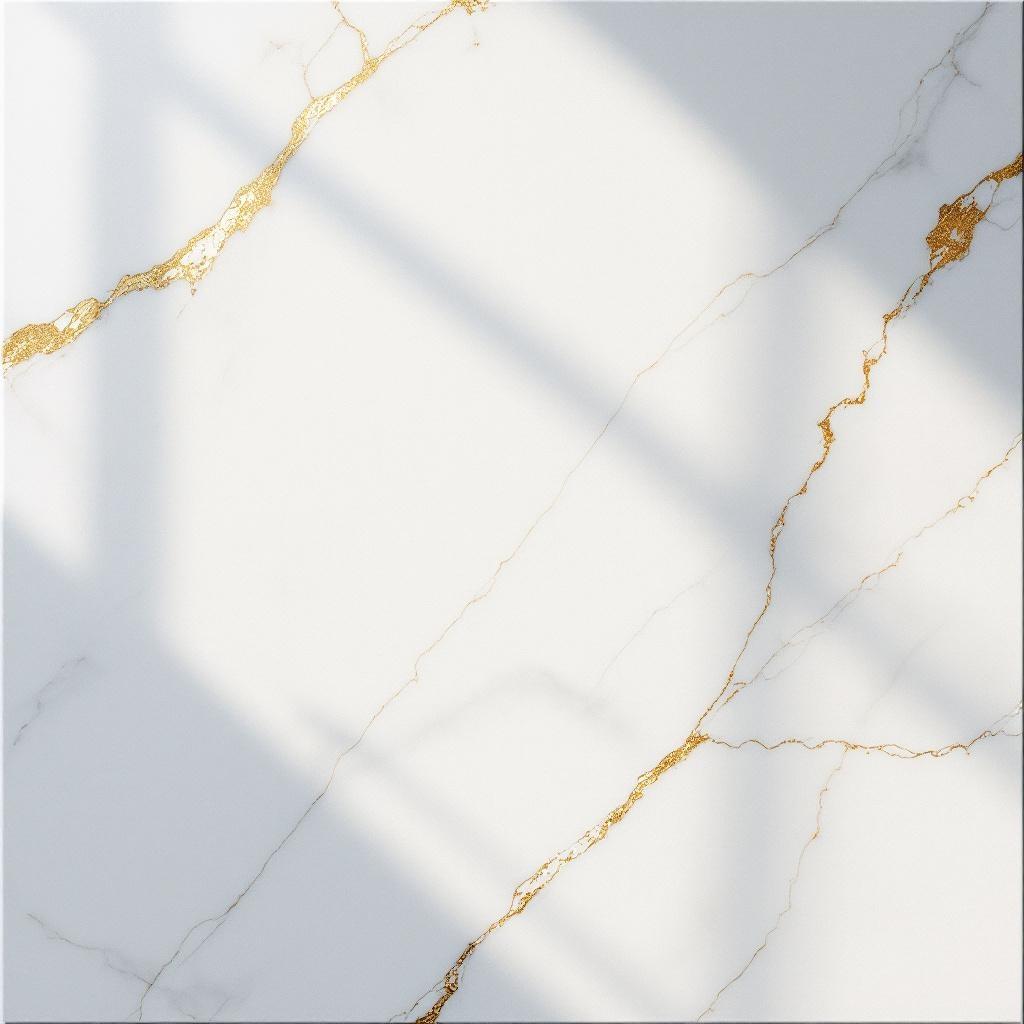
Polished — high-gloss, formal.
Polished finish is the result of progressively finer abrasive passes — typically ending at 3000-grit or higher diamond pads — until the surface is reflective. Light hits it and bounces back nearly intact. Veining looks dramatic; color reads saturated; the slab photographs beautifully under any light source.
The trade-off in a real kitchen: every fingerprint, every water spot, every drip of olive oil shows. Etching on a polished marble surface is dramatic — the dull spot reads against the mirror background like a stain on a windshield.
“Polish photographs. Honed lives.”
— Marina K., kitchen designer · Brooklyn
Honed — matte, soft, forgiving.
Honed finish stops the abrasive sequence earlier — typically around 220 to 600 grit. The surface is flat and smooth but not reflective. Light scatters off it instead of bouncing. Veining still reads, but with a softer contrast.
In real-world kitchens, honed forgives almost everything polished punishes. A fingerprint, a water spot, an etch — all of them blend into the matte background instead of standing in relief. The patina story unfolds slowly and quietly. Most third-generation stoneyards in Italy specify honed for floors and polished for walls for exactly this reason.
Side by side.
Polished
High-gloss · formal
- Reflectance
- 70–85%
- Veining
- High contrast
- Etching shows
- Dramatically
- Fingerprints
- Visible
- Maintenance
- Daily wipe
- Cost vs. honed
- +$5–$10 / sqft
- Best for
- Walls · low-traffic · formal kitchens · bath countertops
Honed
Matte · soft · forgiving
- Reflectance
- 15–25%
- Veining
- Soft contrast
- Etching shows
- Subtly — blends into patina
- Fingerprints
- Minimal
- Maintenance
- Weekly wipe
- Cost vs. polished
- Baseline
- Best for
- Floors · counters · high-traffic · families
How to specify.
01
See it dry, in your room
Wet stone misleads. A polished slab and a honed slab read almost identically when wet from cutting. Get dry samples in your room, under your light, before you sign.
02
Match finish to traffic
Honed for floors and high-use counters. Polished for walls, fireplace surrounds, and decorative surfaces. The finish is a use-case decision before it is a style decision.
03
Test the etch
On marble, drop lemon juice on a sample of each finish. Wait two minutes. Wipe. The etch on polished is dramatic; on honed it's barely visible. Decide which you can live with.
04
Confirm the finish on the listing
Honed Earth listings always include the finish — it's the third field after stone type and thickness. The supplier is on the hook for what they listed. If the slab arrives with a different finish, the trail proves it.
A note on this
On ‘leathered’ and other in-between finishes.
Some suppliers offer leathered (a textured-matte finish that adds tactile grip), brushed (lightly textured, almost honed), or flamed (granite-only, deeply textured for outdoor traction). These are real finishes with real trade-offs. The Honed Earth listing system supports all of them — finish is a typed enum, never a free-text field, and what's listed is what ships.
“When the finish is wrong, the kitchen is wrong. The stone underneath was fine.”
— Lou D., third-generation fabricator
Lineage
A short history of finish.
Antiquity
Roman bath houses use both polished and honed marble. Polished for walls (catches the candlelight); honed for floors (less slip in water).
1700s
Italian stonecutters develop the modern hone-vs-polish vocabulary. Different abrasive grits define different finish steps.
1990s
Mass-import marble in US residential kitchens nearly always ships polished — the finish reads better in showroom catalog photography.
2010s
Honed makes a comeback in residential as the maintenance reality of polished marble in real kitchens becomes widely known. Designers start specifying honed by default for daily-use surfaces.
2026
Honed Earth treats finish as a first-class specification field. Listings carry it; quotes default to it; the audit trail proves what shipped.
Common questions
Can I have one slab honed and the next polished?
Yes. Finish is applied at the fabrication stage, not at the quarry. The same slab from the same lot can ship to two different fabricators in two different finishes. The lot stays the same; the finish field on the listing changes.
Is honed cheaper than polished?
Slightly. Polishing requires more passes and more time, so polished slabs run $5–$10/sqft more on average. The lot, the supplier, and the dimensions are otherwise identical.
Does the finish affect sealing?
Honed surfaces absorb sealer slightly faster — the matte texture is more porous at a microscopic level. Both finishes need annual sealing for marble or quartzite; the difference in absorption is on the order of minutes, not days.
What about leathered and brushed?
Both are honed-with-extra-texture. Leathered adds a subtle pebbled feel; brushed is lighter and reads almost like satin. They cost about the same as honed and behave the same for daily maintenance.
See finish-by-finish on real slabs.
Every listing on Honed Earth carries the finish as a typed field. Filter by polished, honed, leathered, brushed, or flamed.